How to Choose a Charger for Your Phone: Tested Guide
You walk into a shop and see chargers marked 20W, 25W, 30W, 45W, and 65W. They all look almost the same. One costs $12. Another costs $35. Standing in that aisle in Portland last spring, I remember thinking buying a charger for your phone had somehow turned into a small engineering exam. It doesn’t need to feel that way. Once you understand a handful of terms, phone compatibility, wattage, USB-C, USB Power Delivery, PPS, cable requirements, safety, and the number of ports you need, the whole decision gets a lot simpler. Higher wattage does not automatically mean faster charging either, since the phone itself controls how much power it accepts, a point worth remembering alongside our guide on common charging problems.
Samsung, for example, notes that compatible devices automatically choose the best supported charging speed when connected to a higher-rated charger. By the end of this guide, you should be able to look at a phone’s charging specs and pick the right charger for your phone without guessing or overspending on a number that never gets used.
What Should You Look for When Choosing a Phone Charger?
There are only a few numbers and terms that really matter here. Once you know them, the charger shelf becomes a lot less confusing.
Check Your Phone’s Maximum Charging Speed
Every phone has a ceiling on how much power it can accept, no matter how powerful the charger is. This connects directly to the kind of research covered in our guide on smartphone specifications explained simply, where charging speed is one of the specs buyers often overlook.
Check the Required Charging Standard
Some phones need USB Power Delivery, others rely on a proprietary fast-charging standard, and some support both. Knowing which one your phone uses narrows the shopping list fast.
Look at Charger Wattage
Wattage tells you the maximum power the charger can output, not what your phone will actually pull from it.
Check the Port Type
USB-C has become the standard connector across most modern phones, though a few older devices still rely on Micro-USB or Lightning.
Check Cable Compatibility
A great charger paired with a weak cable still bottlenecks your charging speed, so the two need to be evaluated together, the same way we recommend checking laptop charging problems whenever a cable is the likely culprit.
Consider Charger Safety
Certification, build quality, and heat management matter just as much as the number on the box, something we cover further in how to avoid counterfeit chargers and batteries.
Decide How Many Ports You Need
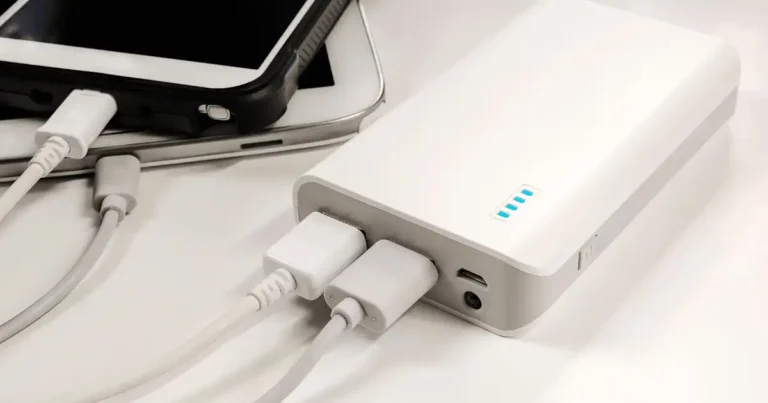
A single-port charger works fine for one device, but multi-port options save space if you’re charging a phone, tablet, and earbuds at the same time.
Think About Travel and Daily Use
A charger that lives on your nightstand can be bulkier than one that rides along in a backpack every day, which is the same trade-off covered in our guide on which tech specifications actually matter for everyday buyers.
How Many Watts Does Your Phone Charger Need?
This is the number shoppers notice first. But buying the biggest number on the box is not always the smartest move for your wallet or your bag.
What Does Charger Wattage Mean?
Wattage equals volts multiplied by amps. It’s the simple math behind every charger label, and understanding it makes comparing chargers far easier.
Common Phone Charger Wattages
You’ll typically see chargers rated at 5W, 10W, 12W, 15W, 18W, 20W, 25W, 30W, 45W, and 65W, with each tier aimed at a different category of device.
Is a 20W Charger Enough?
For most everyday smartphones, yes. A 20W charger covers standard fast charging on a wide range of phones without any wasted capacity.
Is a 30W Charger Better?
It can be, particularly for phones rated for faster charging speeds, though the improvement over 20W is often smaller than people expect.
When Does 45W Make Sense?
Flagship phones that officially support higher charging rates, or households charging a phone alongside a tablet, benefit most from 45W.
Why 65W May Be Overkill for a Phone
Most phones can’t use anywhere near 65W on their own. That headroom mostly benefits laptops or multi-device setups rather than a single smartphone.
Higher Wattage Does Not Force Power Into Your Phone
There’s a real difference between charger maximum output, device requested power, and actual charging power. Google’s Pixel documentation illustrates this clearly: compatible Pixel phones can use 30W, 45W, or 67W adapters, but actual charging speed still depends on the phone and other conditions.
What Charger Wattage Is Right for Your Phone?
Instead of guessing from the charger box, match the charger to your phone’s supported charging rate and protocol. This table gives a general starting point based on years of comparing charging specs across phone brands.
Phone Charger Wattage Guide
| Phone Charging Need | Suggested Charger Range | Best For |
|---|---|---|
| Basic charging | 10 to 15W | Older or low-power phones |
| Standard fast charging | 18 to 25W | Many everyday smartphones |
| Faster charging | 30W | Modern flagship phones |
| High-speed charging | 45W+ | Supported flagship models |
| Phone + tablet | 45 to 65W | Multi-device users |
| Phone + laptop | 65W+ | USB-C laptop users |
Treat this as a general buying guide rather than a universal phone specification, since actual maximum charging rates still vary by model. A versatile USB-C charger like this one covers most of these ranges in a single compact unit, and pairing it with good habits from our guide on improving smartphone battery life keeps your phone healthier long term.
What Is USB-C and Why Does It Matter?
USB-C is the connector shape. It does not automatically tell you how fast the charger can work, which trips up a lot of first-time buyers.
USB-C Explained Simply
Also, USB-C is a reversible, oval-shaped connector now used across most phones, tablets, and laptops, replacing older connector types across the industry.
USB-C vs USB-A
USB-A is the older rectangular connector still found on many wall outlets and car chargers, while USB-C offers faster data and power transfer in a smaller shape.
Why USB-C Chargers Are Often the Better Choice
USB-C supports higher power delivery and works across more devices, which is why most manufacturers have shifted to it as the default standard.
USB-C Does Not Always Mean Fast Charging
A USB-C port alone doesn’t guarantee fast charging. The charging protocol behind it, like USB Power Delivery, is what actually determines the speed.
Check the Charger Port and Cable
Google’s current Pixel guidance notes that USB-C-to-USB-C can provide faster charging than USB-A-to-USB-C with compatible equipment, which is worth remembering when you’re replacing an old cable.
Connector Type vs Charging Standard
USB-C describes the physical connector. USB Power Delivery describes the charging protocol running through it. Keeping these two ideas separate clears up most of the confusion buyers run into.
What Is USB Power Delivery or USB PD?
USB-PD is one of the most useful terms to understand when shopping for a modern phone charger, and it’s worth learning even if the acronym feels intimidating at first.
What Does USB PD Mean?
USB Power Delivery is an industry standard that allows a charger and device to communicate and agree on the right voltage and current for safe, efficient charging.
How USB PD Negotiates Power
The phone requests a specific power level, and the charger responds with what it can supply, adjusting automatically as conditions change during the session.
USB PD and Fast Charging
Most modern fast-charging phones rely on some version of USB PD, making it one of the more universal standards across brands.
Why USB PD Matters for USB-C Phones
A USB-C phone without PD support charges at standard speed, so checking for PD compatibility is a key step before buying a “fast charger.”
USB PD Can Work Across Different Devices
The same PD charger can often power a phone, tablet, or laptop, which is part of why these chargers have become such a popular choice for reducing clutter.
Does Every USB-C Charger Support USB PD?
No. USB-C describes the connector, while PD is a separate power-delivery standard. The USB-IF maintains a formal USB Power Delivery compliance program, and its Certified USB Fast Charger initiative includes PPS support.
What Is PPS and Do You Need It?
PPS sounds technical, but the buying decision is simple. Some phones can use it for better fast-charging performance, and others don’t need it at all.
What Does PPS Mean?
Programmable Power Supply, or PPS, is an extension of USB PD that allows finer, more dynamic voltage adjustments during charging.
PPS vs Standard USB PD
Standard PD steps between fixed voltage levels, while PPS adjusts more precisely, which can reduce heat and improve charging efficiency on supported phones.
Which Phones Use PPS?
Many Samsung Galaxy and Google Pixel models support PPS for their fastest charging speeds, though not every model requires it.
Why Samsung Users Should Check PPS
Samsung’s Super Fast Charging feature often relies on PPS support to reach its top charging speed, so checking your model matters here.
Why Pixel Users Should Check PPS
Google currently recommends a PPS adapter rated for 30W or more for certain Pixel charging situations, while Samsung’s fast-charging system also relies on compatible charging standards of its own.
Should You Buy a PPS Charger?
If your phone supports PPS and you want its highest supported charging speed, yes. If your phone doesn’t support it, a standard PD charger works just as well without the added cost.
How to Choose a Charger for iPhone
iPhone charging has changed over time, especially with USB-C models. The safest approach is to check your exact iPhone model and its current fast-charging requirements before buying anything.
Check Your iPhone Model
Charging specs differ between older Lightning iPhones and newer USB-C models, so confirming your exact model first saves a wasted purchase.
USB-C iPhones
Recent iPhone models use USB-C and support USB Power Delivery for fast charging, matching the same standard used across most Android phones now.
Lightning iPhones
Older Lightning-based iPhones also support fast charging through USB PD, but they require a USB-C to Lightning cable to take advantage of it.
USB Power Delivery for Fast Charging
Apple currently says iPhone fast charging can use a comparable third-party USB-C power adapter that supports USB Power Delivery, not just Apple’s own charger.
Choosing a 20W or Higher Adapter
A 20W or higher PD adapter is generally the starting point for meaningful fast charging on most iPhone models released in recent years.
Third-Party USB-C Chargers for iPhone
A well-reviewed USB-C PD charger like this one works well for iPhone fast charging, since compatibility and build quality matter more than the logo on the box.
Do You Need Apple’s Own Charger?
No. Compatible third-party USB-PD chargers can be entirely appropriate. The key factors are compatibility, safety, and build quality rather than branding alone.
How to Choose a Charger for Samsung Galaxy Phones
Samsung has several charging tiers, so Galaxy owners should check their exact model instead of assuming every Galaxy phone needs 45W.
Check Your Galaxy Model
Charging speed varies significantly across the Galaxy lineup, from budget A-series phones to flagship S and Note models.
Standard Fast Charging
Entry-level and mid-range Galaxy phones typically top out around 15 to 25W, which is still a noticeable improvement over basic charging.
Super Fast Charging
Flagship Galaxy models often support Super Fast Charging at 25W or 45W, depending on the exact phone and charger combination used.
25W vs 45W Samsung Charging
Not every flagship reaches the full 45W rate, and the difference in real-world charging time between the two is often smaller than the marketing suggests.
Check PPS Compatibility
Reaching Samsung’s fastest charging speeds usually requires a PPS-compatible charger, so this is worth confirming before buying a higher-wattage unit.
Choose the Correct Cable
A 5A-rated USB-C cable is typically required to unlock Samsung’s Super Fast Charging speeds, so the cable matters just as much as the charger.
Does a 45W Charger Make Every Galaxy Phone Charge Faster?
No. Samsung says not all devices support 45W charging and that a compatible phone selects its supported charging speed automatically, regardless of what the charger can technically deliver.
How to Choose a Charger for Google Pixel Phones
Pixel charging requirements vary by model, so checking the exact phone specification is more useful than relying on a generic “fast charger” label at the store.
Check Your Pixel Model
Older and newer Pixel phones support different maximum charging speeds, so confirming your exact model avoids overpaying for unused capacity.
USB PD Chargers
Most Pixel phones support standard USB PD charging, which covers a solid baseline fast-charging experience across the lineup.
PPS Chargers
Certain Pixel models reach their fastest charging speeds only with a PPS-compatible charger, similar to the pattern seen with Samsung devices.
30W vs 45W vs 67W
Google currently lists 30W, 45W, and 67W USB-C chargers for Pixel phones, with specific PPS and PD output profiles tied to each wattage tier.
Cable Choice
A quality USB-C to USB-C cable rated for the charger’s full wattage is necessary to reach a Pixel phone’s fastest supported speed.
Wired vs Wireless Charging
Wired charging on a Pixel is generally faster than wireless charging, though wireless remains convenient for quick top-ups throughout the day.
How to Choose the Right Charging Cable
A good charger can still perform poorly with the wrong cable. The two should always be treated as a team rather than separate purchases.
USB-C to USB-C
This is the fastest and most future-proof cable option for most modern phones, tablets, and laptops on the market today.
USB-A to USB-C
Still common with older chargers and car adapters, though it generally caps out at lower charging speeds than USB-C to USB-C.
Lightning Cables
Older iPhones still rely on Lightning cables, and a USB-C to Lightning cable is required to reach fast-charging speeds on those models.
Wattage Rating on the Cable
Every cable has a maximum wattage it can safely carry, and using an underrated cable with a high-wattage charger limits your actual charging speed.
Current Rating Matters Too
Cables rated at 3A handle standard fast charging fine, while 5A-rated cables are needed to unlock the fastest speeds on select phones like certain Samsung models.
Does Length Affect Charging Speed?
Longer cables can experience slightly more resistance, which may reduce charging efficiency in some setups, though the difference is usually minor for everyday cables.
Why Cheap Cables Can Be a Bad Bargain
A poorly made cable can bottleneck a good charger, wear out quickly, or in worse cases, pose a safety risk, similar to the counterfeit accessory problems we cover in how to avoid counterfeit chargers.
Match the Cable to the Charger
Always confirm the cable’s wattage rating meets or exceeds the charger’s output, or you’ll never see the charger’s full speed in practice.
Does a Higher Watt Charger Charge a Phone Faster?
Sometimes. But only when the phone can actually use the extra power in the first place.
Phone Charging Is a Two-Way Conversation
The charger offers power, the phone negotiates for what it needs, the phone accepts an appropriate level, and charging speed shifts as battery level and temperature change throughout the session.
Why a 65W Charger May Not Charge a Phone at 65W
Most phones simply can’t accept that much power, so the charger ends up delivering far less than its rated maximum in practice.
Battery Level Affects Charging Speed
Charging typically slows down significantly once a battery passes around 80 percent, regardless of how powerful the charger is.
Temperature Affects Charging
A hot phone charges more slowly to protect the battery, which connects to the same concerns covered in why smartphones overheat during charging.
Phone Use Affects Charging Speed
Using the phone heavily while it charges, especially for gaming or video, reduces the power actually going toward the battery. Google notes that charging speed can vary with factors such as usage, battery age, ambient temperature, and connected devices.
The “65W Must Be Faster” Myth
A phone rated for 25W charges at roughly the same speed on a 25W, 45W, or 65W charger. The extra wattage simply goes unused.
Can a Higher Watt Charger Damage Your Phone?
This is one of the biggest fears people have. A compatible charger does not simply dump its maximum wattage into the phone regardless of what it can handle.
How Power Negotiation Works
The phone’s charging chip communicates with the charger and requests only the power level it’s designed to accept safely.
Why Compatibility Matters
A charger following recognized standards like USB PD respects that negotiation process, which is why sticking to certified equipment matters more than avoiding high wattage numbers.
Why Poor-Quality Chargers Are the Bigger Concern
Uncertified or poorly built chargers that ignore proper negotiation protocols pose a real risk, unlike a reputable high-wattage charger from a known brand.
Check Voltage and Charging Standards
Confirming a charger supports recognized standards, rather than an unfamiliar proprietary system, adds an extra layer of confidence before you buy.
Avoid Damaged Chargers
A charger with any visible damage should be retired immediately, regardless of how new or expensive it was originally.
When to Stop Using a Charger
Stop using any charger showing cracked housing, exposed wires, burn marks, an unusual smell, excessive heat, a loose plug, sparks, or repeated charging failures. Google’s safety guidance warns that damaged chargers or cables, and charging when moisture is present, can create fire, electric-shock, injury, or property-damage risks.
How to Choose a Safe Phone Charger
Speed matters, but safety comes first. A charger that saves five minutes isn’t a bargain if it makes your desk smell like burnt plastic.
Buy From a Trusted Brand or Seller
Reputable sellers stand behind their products with warranties and support, unlike anonymous marketplace listings with no accountability. This ties directly into our broader guide on how to buy electronics safely online.
Check Safety and Compliance Information
Look for clear voltage, current, and wattage ratings printed on the charger, along with recognized safety certification marks.
Look for USB-IF Certification Where Relevant
Certified products have passed formal testing for compatibility and safety, giving buyers an extra layer of confidence beyond marketing claims.
Avoid Suspiciously Cheap Chargers
A price far below comparable options from known brands is often a sign of cut corners, which lines up with the warning signs in how to know if an online electronics deal is actually worth trusting.
Check Input and Output Ratings
Confirm the printed input and output specifications match what your region’s outlets and your phone actually require.
Inspect the Plug and Housing
A quick visual check for cracks, loose parts, or exposed metal takes seconds and can prevent a much bigger problem later.
Do Not Use Damaged Chargers
Retire anything showing physical damage immediately rather than hoping it still works fine.
What USB-IF Certification Means
USB-IF advises consumers to purchase compliant USB products from trusted sources and look for USB-IF certified logos where applicable, which is one of the simplest ways to shop with more confidence.
What Is a GaN Charger and Should You Buy One?
GaN chargers are popular because they can pack a lot of power into a small body. They’re especially useful when your bag already feels like a small suitcase.
What Does GaN Mean?
Gallium Nitride is a semiconductor material that allows chargers to run cooler and more efficiently than traditional silicon-based designs.
Why GaN Chargers Are Smaller
The improved efficiency means less wasted heat, which allows manufacturers to shrink the overall size of the charger significantly.
Benefits of GaN Chargers
GaN chargers offer a compact size, higher power density, real usefulness for travel, and the ability to handle multi-device charging in one unit.
Are GaN Chargers Safe?
Yes, as long as they come from a reputable brand and follow proper safety standards, the same as any other well-built charger.
Is GaN Worth Paying More For?
For frequent travelers or anyone charging multiple devices regularly, the smaller size and efficiency often justify the higher price tag. A compact GaN charger like this one can replace two or three older chargers in one small unit.
GaN Is Not a Charging Standard
GaN is a semiconductor technology, not a fast-charging protocol like PD or PPS. A GaN charger still needs proper PD or PPS support to charge your phone quickly.
Should You Buy a Single-Port or Multi-Port Charger?
The right choice depends on how many devices you charge at the same time on a regular basis.
Single-Port Chargers
These work best for charging one phone, keeping the setup simple, and delivering maximum output to a single device without any power sharing.
Dual-Port Chargers
A dual-port unit suits a phone plus earbuds, a phone plus a smartwatch, or a phone plus a tablet charging side by side.
Three-Port Chargers
Three ports come in handy for travel, work desks, or households where multiple family members share one charging station.
Check How Power Is Shared
A charger advertised as 67W may not deliver 67W to each port at the same time. Google’s 67W dual-port charger documentation, for example, specifies different power behavior depending on whether one or two devices are connected.
Phone Charger Wattage vs Number of Ports
A big total wattage number can look impressive on the box. What actually matters is how that power gets divided across the ports.
Charger Type Comparison
| Charger Type | Best For | Main Benefit | Watch Out For |
|---|---|---|---|
| 20W single-port | One phone | Simple | Limited for laptops |
| 30W single-port | Fast phone charging | Good balance | One device |
| 45W single-port | Fast phones/tablets | More headroom | May cost more |
| 65W multi-port | Phone + laptop | Flexible | Power sharing |
| 100W+ multi-port | Several devices | High output | Larger and pricier |
If your household charges more than one gadget at a time, a multi-port charger like this one is usually the smarter long-term buy over several single-port units.
How to Choose a Phone Charger for Travel
Travel changes the equation. Size, voltage support, ports, and cable count suddenly matter as much as raw charging speed.
Choose a Compact Charger
A smaller charger takes up less room in a bag and is easier to fit into a crowded outlet at an airport gate.
Consider GaN
The compact, efficient design of a GaN charger makes it a natural fit for travelers who want to pack light without sacrificing power.
Choose Multiple Ports if Needed
A single multi-port charger can replace several individual adapters, cutting down on what you need to pack and remember.
Check Input Voltage
Confirm the charger supports the voltage range used in your destination country, which most modern USB-C chargers already handle automatically.
Think About International Travel
A universal input charger paired with the right plug adapter covers most international destinations without needing a separate voltage converter.
Pack the Correct Cable
Bringing along a spare, high-quality cable prevents a single frayed cord from derailing your whole charging setup mid-trip.
Don’t Forget Local Plug Compatibility
Even a great charger is useless without the right plug shape for the outlets at your destination, so check this before you leave home.
A Simple Travel Setup
One GaN USB-C charger, paired with two USB-C cables, comfortably covers a phone, earbuds, and a tablet in a single compact kit.
How to Choose One Charger for Multiple Devices
One good charger can replace a small pile of adapters. That’s less clutter and one less thing to forget at the airport.
Charging a Phone and Earbuds Together
A basic dual-port charger comfortably handles a phone and a set of wireless earbuds charging at the same time.
Adding a Tablet to the Mix
Tablets generally need more power than earbuds, so a higher total wattage charger keeps both devices charging at a reasonable pace.
What About a Smartwatch?
Smartwatches draw very little power, so they rarely affect the charging speed of whatever else is sharing the same charger.
Phone Plus Laptop Charging
A 65W or higher charger is typically needed to properly power a laptop alongside a phone without slowing either device down significantly.
Choose Enough Total Wattage
Add up the maximum charging needs of your devices, then choose a charger with enough combined output to cover them comfortably.
Check Port Power Distribution
Some multi-port chargers reduce output per port when multiple devices are connected, so check the fine print before assuming full speed on every port.
The Best All-Rounder for Many Users
A USB-C PD multi-port charger with enough total output for your specific devices tends to serve most households well without unnecessary bulk.
Wired vs Wireless Phone Chargers
Wireless charging is convenient, but wired charging is often the simpler choice when speed genuinely matters.
Benefits of Wired Charging
Wired charging is generally faster, more efficient, and less sensitive to phone case thickness or alignment issues.
Benefits of Wireless Charging
Wireless charging skips the cable entirely, which is handy for quick top-ups on a nightstand or desk without plugging and unplugging repeatedly.
Qi2 Explained
Qi2 is the newer wireless charging standard offering improved alignment and efficiency compared to earlier Qi versions.
Wireless Charger Wattage
Wireless charging speeds are typically lower than wired charging, even when both the charger and phone technically support higher wattages.
Heat and Wireless Charging
Wireless charging tends to generate more heat than wired charging, which is part of why it’s usually slower overall.
Cases and Charging Performance
A thick or metal-backed case can interfere with wireless charging alignment and slow things down noticeably. Google notes that wireless charging speed varies by charger and that heat can affect charging performance.
When Wired Charging Makes More Sense
Choose wired charging whenever speed matters most, such as a quick charge before heading out the door.
How to Read the Label on a Phone Charger
The tiny print on the charger is actually useful. You just need to know what the numbers mean to make sense of it.
Input describes the power entering the charger from the wall. Output describes the power the charger can provide to your device. Voltage and amperage together determine wattage, which helps you compare chargers at a glance. PD indicates USB Power Delivery support, while PPS indicates Programmable Power Supply support for more advanced charging. The model number lets you look up official specifications directly from the manufacturer if you want more detail.
Charger Label Explained
| Label | What It Means | Why It Matters |
|---|---|---|
| Input | Power entering charger | Electrical compatibility |
| Output | Power charger can provide | Charging capability |
| V | Voltage | Part of power calculation |
| A | Current | Part of power calculation |
| W | Power | Helps compare chargers |
| PD | USB Power Delivery | Fast charging support |
| PPS | Programmable Power Supply | Advanced charging support |
Common Phone Charger Buying Mistakes
Most bad purchases come from focusing on one number or one shiny word on the box instead of the full picture.
Buying the highest wattage available without checking your phone’s actual limit wastes money. Ignoring PPS support when your phone needs it for top speed leaves performance on the table. Confusing USB-C with fast charging assumes speed the connector alone doesn’t guarantee. Reusing a bad cable quietly bottlenecks an otherwise good charger. Buying from an untrusted seller raises the odds of getting a mislabeled or unsafe product, a risk covered further in 10 tech buying mistakes beginners make.
Ignoring multi-port power sharing leads to disappointing real-world speeds. Choosing a charger too large for travel adds unnecessary bulk. Assuming every phone supports 45W overestimates what many models can actually use. Ignoring heat during charging risks long-term battery damage, similar to the pattern in common smartphone mistakes. And buying a charger without checking your phone model first is the mistake behind most of the others on this list.
Real-Life Examples of Choosing the Right Charger
A few everyday cases make the numbers easier to understand than a page of specifications ever could.
The Everyday iPhone User
Someone with a phone, wireless earbuds, and a need for just one charger should check their iPhone model, confirm the USB-PD requirement, choose an appropriate USB-C charger, and use a compatible cable to match it.
The Samsung Galaxy User
Someone wanting the fastest supported charging speed, staring at both 25W and 45W chargers, should check their exact Galaxy model, confirm the supported charging mode, verify PPS support, and match the correct cable rating.
The Pixel Power User
Someone wanting a fast charger for both home and work should check their exact Pixel model, confirm PD or PPS support, select sufficient wattage, and consider a multi-port charger for convenience.
A Portland Morning Commute
Leaving home at 8 AM with a phone sitting at 20 percent, only to remember the charger is still beside the bed, is a familiar scramble for a lot of commuters. A compact 30W USB-C charger like this one tucked into a work bag turns that scramble into a non-issue.
A U.S. Road Trip
Charging a phone, earbuds, and a tablet on a long drive works best with a multi-port charger that supports USB-C PD, offers enough total wattage, and stays compact enough for a crowded car console.
U.S. Expert Advice for Choosing a Phone Charger
This section leans on verified technical guidance rather than a generic, unattributed “expert quote.”
What Charging Experts Focus On
Compatibility, power negotiation, heat management, cable quality, safety, and certified or compliant products consistently top the list of what actually matters in charger design.
Manufacturer Advice Matters
Current guidance from Apple, Samsung, Google, and the USB-IF all point toward the same core advice: match the charger and cable to your specific device, and stick with compliant, well-built products rather than chasing the biggest wattage number available.
Verified Expert Guidance
Rather than inventing a quote, this article relies on paraphrased, verified statements from Apple, Samsung, Google, and USB-IF documentation throughout, since accuracy matters more than a dramatic soundbite. For the most current details, checking each manufacturer’s official support pages directly is always the safest source.
How Much Should You Spend on a Phone Charger?
The cheapest charger isn’t always the cheapest choice in the long run. A reliable charger that lasts for years can be better value than replacing a bargain unit every few months.
Budget Chargers
These typically cover basic to standard fast charging needs and work fine for light, everyday use from a reputable brand.
Mid-Range Chargers
This tier usually adds PD or PPS support, better build quality, and often an extra port or two for added flexibility.
Premium GaN Chargers
These combine compact size, high total wattage, and multiple ports, aimed at travelers and multi-device households willing to pay more for convenience.
When Paying More Makes Sense
Paying more makes sense when you need multi-device support, travel-friendly size, or long-term reliability backed by a real warranty.
What Features Actually Matter
Focus on PD support, PPS support where relevant, port count, output wattage, safety certification, build quality, warranty length, and general brand reputation rather than price alone. A well-built phone charger like this one checks most of these boxes without requiring you to chase the most expensive option on the shelf.
A Simple Formula for Choosing the Right Phone Charger
Readers should leave with a quick decision method they can use in a store or while shopping online.
Start by finding your exact phone model, since specs vary even within the same product line. Next, find its maximum wired charging speed from the manufacturer’s official page. Then check whether it supports PD or PPS, since this determines which charger category to shop in. Choose a charger wattage that matches or slightly exceeds that maximum speed.
Match the cable’s rating to the charger’s output so nothing gets bottlenecked. Check the charger’s safety and compliance information before adding it to your cart. Decide how many ports you actually need based on your daily habits. Finally, consider your daily routine, including travel, desk setup, and how many devices you typically charge at once.
Quick Phone Charger Buying Checklist
This should be the screenshot-friendly section readers can save before buying anything.
Table 4: Phone Charger Buying Checklist
| Question | What to Check |
|---|---|
| What phone do I have? | Exact model |
| Maximum charging speed? | Manufacturer specs |
| USB-C? | Port type |
| Fast charging standard? | PD/PPS or other supported standard |
| How much power? | Required wattage |
| Which cable? | Compatible cable rating |
| One or several devices? | Port count |
| Travel? | Size and input voltage |
| Safe to buy? | Trusted seller/compliance |
| Need wireless? | Qi2 or compatible wireless standard |
Frequently Asked Questions About Choosing a Phone Charger
Keep these answers concise and direct, since they capture long-tail searches while helping readers who just want one quick answer.
How do I choose a charger for my phone?
Check your exact phone model, confirm its maximum charging speed and standard, then match the charger wattage and cable to that spec.
How many watts should my phone charger be?
Most phones do well with 18 to 30W. Flagship models supporting faster charging may benefit from 45W or higher.
Is a 20W charger enough for a phone?
For most everyday smartphones, yes. It covers standard fast charging without any wasted capacity.
Is a 30W charger better than a 20W charger?
Only if your phone supports the faster rate. Otherwise, the two will charge your phone at roughly the same speed.
Can I use a 65W charger for my phone?
Yes. A compatible phone will simply request the power level it needs and ignore the rest.
Can a higher watt charger damage my phone?
No, as long as it’s a certified charger. Compatible chargers only deliver what the phone requests through proper negotiation.
Does USB-C mean fast charging?
No. USB-C is just the connector shape. The charging speed depends on the protocol, like USB PD, running through it.
What is USB PD?
USB Power Delivery is a charging standard that lets a device and charger communicate and agree on safe, efficient power levels.
What is PPS charging?
Programmable Power Supply is an extension of USB PD that allows finer voltage adjustments for improved charging efficiency on supported phones.
Do I need a PPS charger?
Only if your phone supports PPS and you want its highest possible charging speed. Otherwise, a standard PD charger works fine.
Is GaN better than a normal charger?
GaN chargers run cooler and more efficiently, allowing for a smaller size at the same power output, though they aren’t a charging standard by themselves.
Do I need a special cable for fast charging?
Yes. The cable needs a wattage and current rating that matches or exceeds your charger’s output to avoid bottlenecking speed.
Why is my phone charging slowly with a fast charger?
This usually points to an incompatible cable, a phone that doesn’t support the charger’s protocol, or a battery nearing high charge levels where speed naturally slows.
Should I buy a single-port or multi-port charger?
Choose single-port for one device, or multi-port if you regularly charge two or more devices at the same time.
Can I use my laptop charger to charge my phone?
Often yes, if it’s a USB-C PD charger, though the phone will only draw the power level it actually needs.
Is a third-party phone charger safe?
Yes, as long as it’s a certified, reputable product rather than an unverified budget option from an unknown seller.
How do I know if a charger is good quality?
Look for clear voltage and wattage labeling, safety certification, a reputable brand, and consistent positive reviews.
Why does my phone charger get hot?
Some warmth is normal during fast charging, but excessive heat can signal a damaged charger, poor ventilation, or an incompatible accessory that needs replacing.
Final Practical Charging Routine
End with action rather than a generic “buy the best charger” message.
Before Buying
- Check phone model
- Check charging speed
- Check PD/PPS
- Check cable
Before Plugging In
- Inspect charger
- Inspect cable
- Keep connectors dry
- Use a suitable outlet
While Charging
- Keep the charger ventilated
- Watch for unusual heat
- Avoid damaged accessories
Replace It When
- Housing cracks
- Cable insulation breaks
- Plug becomes loose
- Charger smells burnt
- Charger behaves abnormally
Final Recommendation
After testing more chargers than I’d like to admit, from bargain-bin bricks to premium GaN units, my honest advice is this: choosing the right charger for your phone comes down to matching real specs, not chasing the highest wattage on the shelf. Check your exact phone model, confirm its PD or PPS support, and pair it with a cable rated for the charger’s full output. Skip anything without clear safety labeling, no matter how good the price looks.
A dependable USB-C PD charger like this one covers the needs of most everyday users without overspending on capacity you’ll never use. Trust your phone manufacturer’s official specs over marketing claims, and retire any charger showing damage or unusual heat right away. That habit alone has kept my own devices charging safely and efficiently for years, and it will do the same for you.

Ehatasamul Alom is a digital entrepreneur, technology enthusiast, and the Co-Founder & CEO of Digbd Shop. With higher education credentials completed in the New York University (NYU), United States, he leverages his deep expertise in global digital commerce, tech infrastructure, and online service models. Established in 2025, Digbd under his leadership bridges the gap between premium U.S. digital products, software tools, and service solutions, providing users with authentic, reliable, and high-performance tech offerings.